
AP23489856 «Development of Resource-Saving Ore Extraction Technologies Ensuring the Preservation of Mining Infrastructure in Regions with High Tectonic Activity» Project Supervisor – A. Mussin
Relevance
The relevance of the issue is linked to the need to enhance resource conservation during the development of mineral deposits and to ensure the preservation of mining infrastructure facilities located in regions characterized by high contemporary tectonic activity. The greatest risk is posed to mining facilities situated in mountainous areas, where processes of seismic energy release are still ongoing.
Intensive exploitation of mineral deposits, which in recent years has led to continuously increasing volumes of excavated space in rock masses and to greater depths of ore extraction, has resulted in the activation of geodynamic processes and phenomena within the rock mass and at the Earth’s surface. The most hazardous of these include: instantaneous rock failure and collapse of the roof and walls of workings due to elastic energy accumulated in block masses; disruption of aquifers accompanied by violations of the hydrodynamic regime of groundwater and subsurface waters; and destabilization of the ground surface.
Achieved Results
To assess the stability of underground workings, the study employed the limit equilibrium method, which is based on the analysis of force balance along potential failure surfaces. Unlike the classical deterministic approach, which operates with averaged parameter values, this work implements a probabilistic approach, allowing for the consideration of the natural variability of the geomechanical properties of the rock mass.
To enhance the reliability of modeling, a statistical combination of Monte Carlo methods and Latin Hypercube Sampling (LHS) was employed. This approach provides a more comprehensive coverage of the possible states of the rock mass and allows for a statistically justified distribution of the Factor of Safety (FS).
The research methodology integrates field studies of rock mass fracturing with numerical probabilistic stability analysis of the workings. The comprehensive approach includes fracture mapping, stereographic processing, and stability modeling using the limit equilibrium method, taking into account the variability of structural characteristics and strength properties.
This section presents the results of numerical modeling conducted using the Unwedge software package for the probabilistic assessment of wedge stability in underground workings. The analysis was performed for various excavation directions relative to fracture systems identified through structural core analysis. Dynamic effects, including seismic loads, were also taken into account. Special attention was paid to identifying critical excavation directions and optimizing support parameters to ensure stability under fractured and seismically active rock mass conditions.
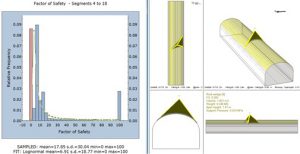
Figure 1 – Results of the probabilistic analysis of wedge stability: distribution of the Factor of Safety and wedge geometry
Figure 1 presents the results of the probabilistic analysis of wedge stability performed using the Unwedge software. The left part of the figure shows a histogram of the Factor of Safety (FS) distribution, generated from a random sampling of the input data across the entire perimeter. The majority of realizations are concentrated in the low FS range, with a significant portion below 1.0, indicating a high risk of wedge instability under the given parameters.
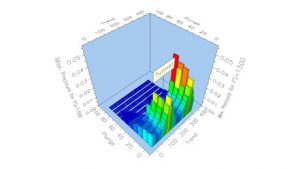
Figure 2 – Spatial distribution of support pressure depending on fracture orientation
Figure 2 presents a three-dimensional diagram of the maximum required support pressure to achieve a Factor of Safety (FS) of 1.5, depending on the excavation direction and dip angle. The diagram is based on the results of a probabilistic analysis conducted in the Unwedge software and illustrates how the spatial orientation of fractures affects the required support pressure. The maximum pressure values correspond to specific combinations of wedge orientations that form the most unstable configurations relative to the excavation contour.
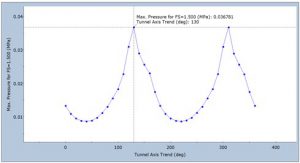
Figure 3 – Dependence of the maximum required support pressure on the excavation axis orientation
Figure 3 illustrates the dependence of the maximum support pressure (required to achieve a Factor of Safety, FS = 1.5) on the azimuth of the excavation axis (Tunnel Axis Trend). The graph demonstrates how the excavation orientation relative to fracture systems affects the required support pressure. It can be observed that for certain excavation axis directions (approximately 130° and 310°), the maximum pressure (up to 0.037 MPa) is required to ensure stability, which corresponds to the formation of the most unstable wedges. These results enable the optimization of excavation direction and support design to minimize the risk of collapse.
List of Publications for the Second Half of 2025
1) A. Mussin, A. Imashev, A. Matayev, B. Khussan, R. Abdrashev. «Probabilistic analysis application to substantiate support parameters in seismically active and fractured rock masses» // Min. miner. depos. 2025, 19(3):66-75, WoS – Q1, Scopus percentile 75.
Research team
1. Mussin Aibek – Scientific Supervisor, PhD, associate prof. of Department “Development of minerals deposites”
Researcher ID – AGD-8697-2022;
ORCID – 0000-0001-6318-9056;
Scopus Author ID – 57225333744.
2. Imashev Askar – Responsible executor, PhD, PhD, associate prof. and Head of Department “Development of minerals deposites”.
Researcher ID – ABC-2138-2021;
ORCID – 0000-0002-9799-8115;
Scopus Author ID – 57204153972.
3. Suiyembayeva Aygerim – PhD, associate prof. of Department “Development of minerals deposites”
Researcher ID – AAC-8234-2022;
ORCID – 0000-0001-6582-9977;
Scopus Author ID – 57204776922.
4. Matayev Azamat – PhD, associate prof. of Department “Development of minerals deposites”
Researcher ID D-3766-2019;
ORCID – 0000-0001-9033-8002;
Scopus Author ID – 57219561578.
5. Zhunusbekova Gaukhar – PhD, Senior Lecturer, Department of Chemistry, Chemical Technology and Ecology, K. Kulazhanov Kazakh University of Technology and Business
Researcher ID – AAE-8004-2022
ORCID – 0000-0003-2842-270X
Scopus Author ID – 57919123700
6. Shaike Nurlan – Senior Lecturer of Department “Development of minerals deposites”
Researcher ID – HLH-4610-2023,
ORCID – 0000-0002-2395-4566,
Scopus Author ID – 58220559500
7. Yeskenova Gulnura – PhD student of Department “Development of minerals deposites”
Researcher ID – АВС-2138-2021
ORCID – 0000-0001-8184-4085
Scopus Author ID – 58191278200
8. Nazarova Aygerim – Specialist of the Department of Science and Innovation
Information for Potential Users
Within the framework of the ongoing research project, the development of a resource-saving technology for the extraction of ore deposits with horizontal and gently dipping mineralization is planned. Special attention will be paid to ensuring the preservation of mining infrastructure facilities, taking into account geo-mining, mining-engineering, and impact-hazard conditions, as well as the specific features of mining operations.
The scientific and technical solutions being developed aim to improve the accuracy of forecasting the stress-strain state (SSS) of the rock mass, which will allow for the prompt adjustment of design parameters in practice and their adaptation to real-world conditions. This, in turn, will contribute to reducing the likelihood of collapses, optimizing the costs of supporting underground workings, and ensuring the stable and safe operation of subterranean facilities.
Field of Application
In the future, the research results are expected to be applied in the design and implementation of efficient underground ore extraction technologies, which could represent a significant contribution to the development of the mining sector.
Information Updated: 01.12.2025
AP23487832 «Development and calculation of a mobile overpass», Project Supervisor – Ganyukov A.A.
Relevance:The project is aimed at developing a mobile utility overpass designed to eliminate traffic jams during repairs to city utility networks. The overpass is a temporary bridge structure that allows vehicles to cross repair trenches, reducing detours and improving the traffic situation in the city. The technology includes installing the overpass on supports across the trench, ensuring continuous traffic flow. The project also provides for the expansion of the overpass application in field conditions, during natural disasters and in the mining industry. The main idea of the project is to develop and calculate the overpass design to improve the organization of traffic.
The aim of the projectis the development of the design and calculation of a mobile overpass used in the repair of utility networks.
Expected and achieved results
Results achieved
– а fundamentally new calculation method has been developed for the optimal arrangement of the overpass supports, taking into account the nonlinear properties of the soil base;
– the condition for the rigidity of the trench side is formulated according to the maximum permissible horizontal displacements, exceeding which can lead to its collapse and loss of operability of the overpass;
– a finite element model of the soil and support array in ANSYS (PLANE42 element) was created using the Drucker-Prager elastoplastic model; refined physico-mechanical parameters, boundary conditions and loads were specified;
– VAT calculations were performed; fields of normal and tangential stresses, vertical and horizontal displacements were obtained; and zones of equivalent plastic deformations were determined;
– it is established that the maximum displacements are concentrated in the trench side area, which confirms the correctness of the criterion for limiting horizontal movements;
– parametric optimization has been performed; response lines have been constructed; correlation dependences have been obtained showing the quadratic nature of the decrease in deformations with increasing distance L;
– the optimal minimum installation distance of the overpass support has been determined, at which the horizontal displacements of the trench side are reduced by more than two times; the deviation from the design solution is approximately 13.5 %;
– a final report has been prepared, including calculations of the strength, rigidity and stability of structural elements, modeling results and a developed methodology for the optimal location of supports;
– the design solutions of the undercarriage of the overpass that meet regulatory requirements and are confirmed by numerical analysis are described and confirmed; recommendations for improving the reliability of the structure are formulated.
Expected results:
– an experimental verification of the operation of the overpass supports will be carried out to include it in the calculation methodology and confirm the previously conducted simulation of the operation of the overpass supports;

а) Transport position

b) Operational position
Figure 1 – 3 D model of the mobile overpass
Research group:
1. Ganyukov Alexander Anatolyevich, PhD, Project Manager
Hirsch index – 8
Author ID in Scopus: 57194493653
ResearcherID:
V-8593-2019
ORCID ID: https://orcid.org/0000-0002-0651-9781
2. Kadyrov Adil Suratovich, Responsible executor,Doctor of Technical Sciences, Professor of the Department of Transport Engineering and Logistics Systems
Hirsch index – 9.
Researcher ID:
W-4738-2018
Author ID in Scopus: 57218826977
http://orcid.org/0000-0001-7071-2300
3. Sarsembekov Bauyrzhan Koblanovich, PhD, assistant professors of the Department of Transport Engineering and Logistics Systems
Hirsch index – 4.
Author ID in Scopus:
57247269800
ResearcherID: KUP-0727-2024
ORCID ID: 0000-0002-4815-1823
4. Sinelnikov Kirill Anatolyevich, PhD,
Hirsch index – 3.
Researcher ID:
JZQ-3793-2024
Author ID in Scopus: 57794838700
https://orcid.org/0000-0001-5073-5716
5. Kukesheva Aliya Bakibaevna, PhD, Assistant Professor of the Department of Transport Engineering and Logistics Systems
Hirsch index -6.
Author ID in Scopus:
57222089958
ResearcherID: AAQ-1014-2020
ORCID ID: https://orcid.org/0000-0002-3063-5870
6. Kabikenov Sapar Zhomartovich- с.t.s., Candidate of Technical Sciences, Professor (Associate Professor of KKSON) the Department of Transport Engineering and Logistics Systems
Hirsch index -3.
Author ID in Scopus:
57188651136
ResearcherID: EZZ-5396-2022
ORCID ID: https://orcid.org/0000-0001-7412-6026
7. Karsakova Akbope Zholaevna, Associate Professor (docent)
Hirsch index -2.
Author ID in Scopus:
57219331470
ResearcherID: LWC-8327-2024
ORCID ID: https://orcid.org/0000-0001-7412-6026
8. Zhumabekov Aidar Temirgalievich, Doctoral student of group TTD-23
ORCID ID: https://orcid.org/0000-0001-9837-8834
List of publications:
1. Ganyukov A.A., Sinelnikov K.A., Kabikenov S.Zh., Karsakova A.Zh. Research and Calculation of the Deformed State of the Roadway Mobile Overpass. Material and Mechanical Engineering Technology, No. 3, 2024, P. 88-95. https://mmet.kstu.kz/download/articles/01102024091607_journalFile.pdf
2. An application for a patent for an invention has been submitted. No. 2025/0056.1 dated 27.01.2025. “Temporary support for a bridge crossing”. Kadyrov A.S.; Ganyukov A.A.; Kukesheva A.B.; Sinelnikov K.A.; Sarsembekov B.K.; Karsakova A.Zh. (the application has passed the formal examination, the application is at the stage of substantive examination).
3. certificate of entering information into the state register of rights to objects protected by copyright No. 59971 dated June 19, 2025. Authors: Zhumabekov A.T., Kadyrov A.S., Ganyukov A.A., Karsakova A.Zh.
Information for potential users:
The developed mobile communal overpass is intended for use by public and private organizations, such as akimats, road departments, ministries of emergency situations, as well as enterprises engaged in construction, repair and mining. The design is highly mobile, which allows for the prompt elimination of traffic jams caused by repair work on communal networks and increases the efficiency of transport infrastructure.
Application area:
• City road services to ensure continuous traffic flow during utility network repairs.
• Construction and repair companies for temporary solutions to transport problems at construction sites.
• Organizations involved in the elimination of the consequences of natural disasters, for the rapid restoration of transport accessibility.
• Mining industry for temporary closure of trenches and provision of process flows.
• Military and rescue services for use in field conditions and emergency situations.
Date of information update: 01.12.2025
AP23487471 «Research and development of a technology for producing furnace lining from technogenic waste of steelmaking production for the metallurgical industry», Project Supervisor – Arinova S.K.
Relevance
Currently, the foundry and metallurgical industries of Kazakhstan require more than 500 thousand tons of refractory materials annually. The main factors leading to premature wear of these materials are their insufficient thermal resistance, low density, and destruction under the influence of molten metal.
To improve the thermal resistance of refractories, the use of steelmaking production waste is increasingly being applied. Kazakhstan has already accumulated 32 billion tons of industrial waste, and this volume continues to grow. A significant portion (70%) consists of technogenic-mineral formations. In the Karaganda region, 110.7 million tons of this waste are concentrated, of which only 42% is recycled, and the rest is stored on industrial sites.
Recycling and utilizing technogenic waste in metallurgy, particularly for furnace lining, can be a solution to this problem. This approach will reduce the anthropogenic impact on the environment near metallurgical enterprises, decrease resource and energy consumption of production processes, and increase environmental and economic efficiency.
Project objective: Development of the composition and production technology of furnace lining based on waste from the metallurgical industry, with increased strength and density using mineral raw materials of the Republic of Kazakhstan.
Results achieved:
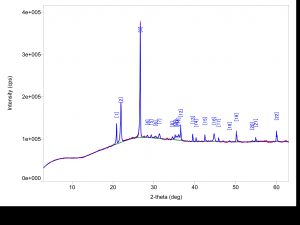
Experiments were conducted to develop a pilot composition of refractory material. In accordance with the obtained mathematical model, experimental work was carried out to design the composition of pilot refractory materials. At this stage of the study, experiments were performed with the addition of slag, as well as slag in combination with ash.
Permissible limits for the use of a conglomerate (ash and slag) in the manufacture of chamotte refractory products were determined to ensure compliance with industrial requirements. The results confirm the suitability of the conglomerate for refractory production.
The use of steelmaking slag as an additive in refractory materials was investigated. Strong and homogeneous materials with low porosity were obtained, making them suitable for lining thermal units in the foundry and metallurgical industries. The conducted studies confirmed the possibility of using ash from low-grade coal as a component of the batch for producing refractory materials. The addition of coal ash to clay allows the compressive strength and density of the samples to be maintained at the level of SHA-type refractories, while reducing open porosity and decreasing the number of large pores. This effect contributes to improved slag resistance of the resulting products.
Relationships between the strength characteristics and thermal shock resistance of the investigated samples were established. Steelmaking slag was used as a modifying additive to enhance the thermal shock resistance of refractory materials.
The slag is characterized by an increased content of calcium silicate phases which, according to the analysis performed, improve the formation of the material structure under high-temperature exposure. As a result, thermal shock resistance increases without a noticeable loss of strength characteristics, making this slag a promising additive for the production of refractory products.
The obtained pilot composition of the refractory material demonstrates performance indicators that meet the established requirements of regulatory documentation. The products are characterized by acceptable values of open porosity, linear shrinkage, refractoriness, and compressive strength, confirming compliance of the pilot sample with GOST standards and its suitability for further application.
 |
 |
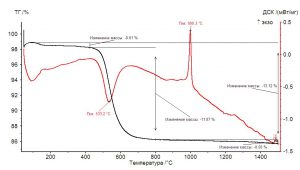 |
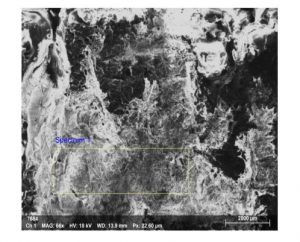
Figure 1 – Research results
List of publications:
1. Arinova S.K., Altynova A.E. Composition of slags from metallurgical plants of the Karaganda region: a scientific review // University Proceedings, Karaganda: Publishing House of Abylkas Saginov Karaganda Technical University. – 2025. – No. 2. – pp. 16–20.
DOI: 10.52209/1609-1825_2025_2_16
2. An application for an invention patent of the Republic of Kazakhstan titled “Composition of Chamotte Bricks” was filed, No. 2025/0196.1, dated March 4, 2025.
The Research Group
It includes 6 performers, 3 of them are under the age of 40, 5 people have an academic degree.
1. Saniya Kaskataevna Arinova – Scientific Supervisor, PhD, Assistant Professor, Department of Metallurgy and New Materials
Hirsch Index – 4
Scopus Author ID: 57192206332
ResearcherID: AAL-2282-2021#
ORCID ID: 0000-0003-1977-8157
2. Svetlana Sergeevna Kwon – Responsible Researcher, PhD in Technical Sciences, Professor, Department of Metallurgy and New Materials
Hirsch Index – 11
Scopus Author ID: 57061892400
ResearcherID: N-5602-2017
ORCID ID: 0000-0002-5439-4426
3. Vitaliy Yuryevich Kulikov – Researcher, PhD in Technical Sciences, Professor, Department of Metallurgy and New Materials
Hirsch Index – 11
Scopus Author ID: 56168395900
ResearcherID: N-5596-2017
ORCID ID: 0000-0001-6191-8569
4. Aristotel Zeynullinovich Isagulov – Researcher, Doctor of Technical Sciences, Professor, Department of Metallurgy and New Materials
Hirsch Index – 10
Scopus Author ID: 57219418150
ResearcherID: C-7415-2016
ORCID ID: 0000-0003-2174-9072
5. Ardak Mukhamedievna Dostaeva – Researcher, PhD, Professor, Department of Metallurgy and New Materials
Hirsch Index – 6
Scopus Author ID: 57215917901
ORCID ID: 0000-0002-1982-2368
6. Asem Erikovna Altynova – PhD Student, Department of Metallurgy and New Materials
Hirsch Index – 0
Scopus Author ID: 59552895100
Information for potential users:
The obtained scientific results can be applied in the development of new production facilities and sites of metallurgical and foundry industries.
Scope of application:
The scope of application of this program is foundry metallurgical and machine-building enterprises.
Date of information update: 01.12.2025
АР23487471 Development and Investigation of Exogenous Suspension Casting Technology for the Production of Alloy Castings Using Modifiers and Foundry Waste, Project Supervisor – A.Z. Isagulov.
Relevance: Modern production places high demands on the quality of cast parts. It is possible to ensure the quality of castings by forming a homogeneous dense casting structure. In turn, these indicators can be obtained by controlling the rate of solidification of the casting and the distribution of alloying elements inside it. One of the promising ways to control the casting structure is casting according to gasified models using inocultors. By using modifiers simultaneously with inoculators, the number of crystallization centers and the distribution of alloying elements can be adjusted. At the same time, it is proposed to use foundry waste (scrap, scrap) as inoculators, which will positively affect the sanitary and hygienic situation in the foundry and will make it possible to reduce the cost of casting.
Project objective: To develop and implement an exogenous suspension casting technology for the production of alloy castings using dispersed inoculants to enhance casting quality.
Results achieved:
A preliminary technological process chart for manufacturing castings by the exogenous suspension casting method using dispersed inoculators has been obtained.
It was determined that the proposed suspension casting technology with the use of dispersed inoculators is a promising method for producing shaped castings, especially thin-walled ones and those made from alloys of complex compositions. This casting method makes it possible to obtain shaped castings of complex geometry with high surface quality and a lower number of casting defects compared to the conventional method of casting into sand–clay molds. This method is sufficiently cost-effective, since foundry production waste is used as inoculators in the manufacture of models.
The influence of auxiliary elements of the polystyrene model on the mechanical and technological properties and the structure of the castings was investigated. Experimental samples with different contents of nanoparticles were obtained.
In order to identify the optimal structure and, consequently, the properties of the finished part, studies were conducted on the effect of the amount of nanoparticles on the microstructure of the finished casting.
The microstructure was examined for the presence of non-metallic inclusions, determination of grain size rating, and the presence of porosity.
The level of contamination by non-metallic inclusions is 4 points according to GOST 1778-80. The non-metallic inclusions are represented by oxides, nitrides, and carbonitrides of chromium, titanium, vanadium, and molybdenum. The contamination index was practically the same at any nanoparticle content.
Microstructural studies for porosity showed that the particle content affects its nature. The structure is characterized by lower volumetric porosity when nanoparticles are introduced in an amount of about 0.1–0.3% of the casting mass and by a finer and more uniform distribution of porosity.
When the nanoparticle content is reduced, their influence is minimized and porosity is concentrated in the surface layer. When the content is increased, axial porosity is observed.
It was determined that the higher the density of the foam plastic, the lower its porosity and the poorer its burn-out ability.
List of publications:
1. An application for an invention patent of the Republic of Kazakhstan titled “Method for Manufacturing Shell Molds” was filed, No. 2025/0121.1, dated February 14, 2025.
2. An application for an invention patent of the Republic of Kazakhstan titled “Method for Manufacturing a Gasifiable Polystyrene Pattern” was filed, No. 2025/0123.1, dated March 4, 2025.
 |
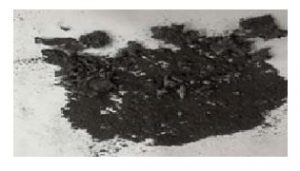 |
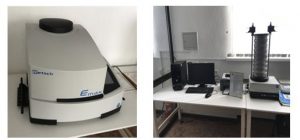
Figure 1 – Physicochemical studies of materials
The Research Group
It includes 8 performers, 4 of them are under the age of 40, 7 people have an academic degree.
1. Isagulov Aristotel Zeynullinovich – Scientific Supervisor, Doctor of Technical Sciences, Professor of the Department of Metallurgy and New Materials
H-index: 10
Scopus Author ID: 57219418150
ResearcherID: C-7415-2016
ORCID: 0000-0003-2174-9072
2. Kulikov Vitaliy Yuryevich – Principal Investigator, Candidate of Technical Sciences, Professor of the Department of Metallurgy and New Materials
H-index: 11
Scopus Author ID: 56168395900
ResearcherID: N-5596-2017
ORCID: 0000-0001-6191-8569
3. Kvon Svetlana Sergeevna – Researcher, Candidate of Technical Sciences, Professor of the Department of Metallurgy and New Materials
H-index: 11
Scopus Author ID: 57061892400
ResearcherID: N-5602-2017
ORCID: 0000-0002-5439-4426
4. Sagintayeva Saule Savetovna – Researcher, Doctor of Technical Sciences, Professor of the Department of Economics and Management
H-index: 3
Scopus Author ID: 57189100003
ORCID: 0000-0001-5034-4192
5. Arinova Saniya Kaskatayevna – Researcher, PhD, Associate Professor of the Department of Metallurgy and New Materials
H-index: 4
Scopus Author ID: 57192206332
ResearcherID: AAL-2282-2021
ORCID: 0000-0003-1977-8157
6. Isagulova Diana Aristotelevna – Researcher, Associate Professor of the Department of Metallurgy and New Materials
H-index: 3
Scopus Author ID: 55778253200
7 Yerzhan Aidana – PhD student of the Department of Metallurgy and New Materials
H-index: 0
Scopus Author ID: 56901129500
ORCID: 0000-0002-6942-2020
8. Kordasheva Akzhan Askhatkyzy – PhD Student of the Department of Metallurgy and New Materials
H-index: 0
Information for potential users:
The obtained scientific results can be applied in the development of new production facilities and sites of metallurgical and foundry industries.
Scope of application:
The scope of application of this program is foundry metallurgical and machine-building enterprises.
Date of information update: 01.12.2025
AP23485184 “Technology of Nuclear-Geophysical Testing of Coals Based on Gamma Spectrometry of Natural Radioactive Elements” Project Supervisor – Pak Y.N.
Relevance
At present, mining enterprises mainly use standard methods for coal sampling, which include the collection of primary samples, their processing (crushing, grinding, reduction), and direct thermogravimetric analysis involving the combustion of an analytical sample (~0.1 mm, 1–2 g) of coal followed by the calculation of ash content. Significant drawbacks of the traditional sampling method are its high labor intensity and low representativeness, as the quality of a large coal batch (hundreds of tons) is assessed based on the results of thermogravimetric analysis of a small analytical sample. In some cases, the final stage of sampling is replaced by instrumental nuclear-physical methods that use radioisotopic sources of gamma and neutron radiation. However, the errors caused by the heterogeneity of coals during labor-intensive stages of sampling and sample preparation remain. An innovative approach to solid fuel testing is proposed, which involves measuring the gamma radiation spectra emitted by natural radioactive elements (uranium-238, thorium-232, and potassium-40). This approach enables high-sensitivity and high-accuracy assessment of coal quality in large masses without prior sample preparation. The practical significance of the research results lies in the development of a new nuclear-geophysical technology for coal testing based on natural gamma radiation spectrometry. This technology will allow the implementation of a quality management system during coal mining and processing based on prompt and objective information about ash content.
Results Achieved in the Second Half of 2025:
As a result of the conducted research, stable correlation relationships were established between the instrumental signals of gamma spectrometric measurements and the concentrations of natural radionuclides (U-238, Th-232, K-40) in tested coals of various genesis and ash content. The analysis of spectra made it possible to identify informative energy lines that most sensitively reflect variations in radionuclide content in the studied samples. This provided an opportunity to improve the accuracy of quantitative interpretation of gamma spectrometry data when monitoring the natural radioactivity of carbonaceous raw materials.
An individual interpretational algorithm for quality assessment was developed, taking into account the ratio of measured instrumental signals as reference parameters to enhance the sensitivity and precision of testing under conditions of diverse radiogeochemical and petrophysical characteristics.
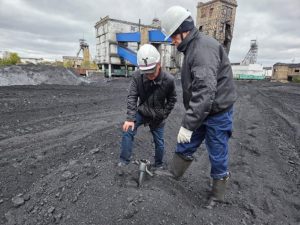 |
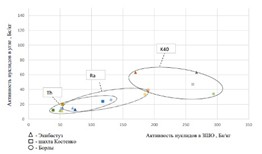 |
Figure 1 – Determination of coal ash content
List of Publications for the Second Half of 2025:
1. Pak D.Yu., Pak Yu.N., Ibragimova D.A. Radioecological Assessment of Kazakhstan’s Coal Power Industry // Proceedings of the International Scientific and Practical Conference “XVII Saginov Readings. Integration of Education, Science and Production”, Part 2, pp. 687–689, 2025.
Research Team
1. Yuriy N. Pak – Project Supervisor, Doctor of Technical Sciences, Professor
h-index Scopus: 7
https://orcid.org/0000-0002-0699-6764
Scopus Author ID: 7102674136
ResearcherID: V-8724-2018
2. Dmitriy Yu. Pak – Responsible Executor, PhD in Engineering, Associate Professor
h-index Scopus: 6
https://orcid.org/0000-0002-7215-7846
Scopus Author ID: 45561507200
ResearcherID: V-8176-2018
3. Petr A. Kropachev – Researcher, PhD in Engineering, Associate Professor
h-index Scopus: 3
Scopus Author ID: 55378112200
4. Anar Yu. Tebaeva – Researcher, Senior Lecturer
h-index Scopus: 1
Scopus Author ID: 57367955300
https://orcid.org/0000-0001-5404-7195
5. Diana A. Ibragimova – Researcher, PhD
h-index Scopus: 2
Scopus Author ID: 57901957700
https://orcid.org/0000-0002-2588-3028
6. Darya I. Vdovkina – Researcher, Master’s Degree, Geologist in the Mining Sector
h-index Scopus: 1
Scopus Author ID: 57476789200
Information for Potential Users
As a result of the project implementation, research data on the radiogeochemical and petrophysical patterns of distribution of natural radioactive elements in coals of different ages and degrees of metamorphism will be obtained. These data can be applied in the predictive diagnostics of associated rare-earth elements, as well as for assessing the radioecological safety of the radioactivity of coals and ash residues in the context of their environmental impact.
Field of Application
Earth and Environmental Sciences
Date of Information Update: 01.12.2025
AР23486482 «Development of Information Models for Controlling Technological Processes of Metallurgical Production, Monitoring of Their Functioning», Project Supervisor – Kazhikenova S.
The goal of the project is to develop an information model for managing production processes based on the fundamental law of conservation of the sum of information and entropy; verification of the information model of production management, covering all technological stages: mining – enrichment – smelting – converting – rough refining – electro-lytic refining in non-ferrous metallurgy; creation of a reference model of production in the context of generating scientific, technical and socio-economic reserves at the micro-, meso-, macro levels.
Relevance
This project solves an urgent scientific problem – the creation and development of information models (IM) based on the principles of mathematical modeling, information theory, computer modeling, and the theory of metallurgical processes. An algorithm for creating information models from a conceptual mathematical model to special configurations of a computer model is built. Verification of information models with real technologies of Vanyukov, ISASMELT,™ Ausmelt, ElTeniente, Salvador, Mitsubishi, QSL, Outokumpu, KIVCET was carried out. For each technological scheme of copper, lead, zinc, tin production, its own information model has been developed, taking into account the indicators of the content and recovery of the target component at each level of its hierarchical structure. Topics related to the verification and certification of software used for the development of information models are also touched upon.
The information model in production represents a new aspect in the modernization of existing and the creation of new technological schemes. The scientific novelty of the research lies in the creation of new mathematical models and software modules for the development of information models, covering all technological stages in the production of non-ferrous metals from mining to electrolytic refining in order to obtain an industrial product of the required quality.
Achievements
Used by Wolfram Mathematica to build and visualize diagrams, graphs of functions of one or more variables, networks, graphs, geographic information, interactivity, and movement in any of the classic formats.
In order to create an IM, the project developed a mathematical model of the hierarchical structure of metallurgical production, covering all technological stages in the production of non-ferrous metals. The model was verified using the coefficient of nonlinear multiple correlation, a universal criterion for a 95% level of reliability of the calculated indicators with practical indicators of the content and extraction of the target component as it moves from raw materials to an industrial product. The scientific novelty of the research lies in the creation of new mathematical models and software modules for the development of IM in the metallurgical industry, taking into account the influence of internal and external load factors. Used by Wolfram Mathematica, WinCC OA, to build and visualize diagrams, graphs of single or multiple variable functions, networks, graphs, geographic information, interactivity, and movement in any of the classic formats. In the project, diagrams, graphs of the dependence of IM and real systems of non-ferrous metal production were built on its basis, and correlation coefficients were calculated. An increase in the coefficient of correlation of IM with real schemes as they are perfected indicates its adequacy and objectivity.
Figure 1 shows the results of modeling the process of obtaining copper rod.
Graphical Abstract
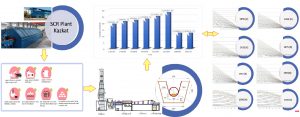
Figure 1. Simulation of the process of obtaining copper rod, covering all technological stages in production from mining to electrolytic refining in order to obtain an industrial product of the required quality
Cooperation, including international cooperation
A mathematical model of the incompressible motion of the melt in a limited region was developed.
The metal melt moved along the inclined chute of the metallurgical equipment.
The motion of the melt is described by the Navier-Stokes equations 1–2:
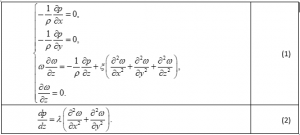
Verification of theoretical results with practical ones made it possible to develop a mathematical model of melt motion and a numerical algorithm for integrating hydrodynamic equations, which will make it possible to predict the technological parameters of casting to obtain high-quality products.
Confirmation of the theoretical results obtained with real parameters of copper melt motion in the technological equipment of the Kazkat Copper Rod Production Plant confirmed the validity and reliability of our research. The correctness and reliability of our calculations were confirmed using real temperatures of the copper melt movement in the range of 1425-1555 [K], which is close to the temperatures in industrial conditions. Calculations show that the average value of the contour velocity is approximately equal to the average velocity of copper melt at the Kazkat copper rod production plant. The results show that the best melting occurred at 1555 [K].
Based on the results of the research, 2 articles were published in peer-reviewed domestic journals recommended by the COCNHE:
1 Кажикенова С., Беломестный Д., Шаихова Г., Шалтаков С., Салхаева Д. Труды университета, 1 (98), 2025, 64 -72 – «Ультрадыбыстық өңдеудің балқытылған жүйелердің құрылымы мен қасиеттеріне ықпалы» https://elibrary.ru/item.asp?id=81226630
2 Kazhikenova S., Shaikhova G., Shaltakov S. Eurasian physical technical journal, 2025, 22, 1(51), 93-102 – «Investigation of some physical and structural properties of melts by ultrasounds».
https://doi.org/10.31489/2025N1/93-102
4 articles have been published in peer-reviewed scientific journals included in Web of Science and Scopus:
1) Kazhikenova S., Shaikhova G., Shaltakov S. Arch. Metall. Mater., индексируемый в Q4 базы Web of Science, имеющий процентиль в базе Scopus 35, «Influence of temperature on ultrasound absorption and structural properties of melts», 70 (2025), 1, 499-507 https://doi.org/10.24425/amm.2025.152570
2) Kazhikenova S. Journal of Information Systems Engineering and Management, индексируемый в Q4 базы Web of Science, имеющий процентиль в базе Scopus 15 «Complex entropy-informational criteria in ferrous metallurgy», 10, 43s (2025), 932-938. https://doi.org/10.52783/jisem.v10i43s.8498
3) Saule Kazhikenova, Gulnazira Shaikhova, Sagyndyk Shaltakov. Lex Localis, имеющий процентиль в базе Scopus 54 «Modelling of Technological Processes for Copper Rod Production» (2025), 23(S5), 992-1010. https://doi.org/10.52152/985mmw78
4) Kazhikenova S. International Journal of Innovative Research and Scientific Studies (IJIRSS), имеющий процентиль в базе Scopus 67 «А physical and mathematical model of the melt motion at the SCR process equipment» (2025), 8(6), 1147–1161. https://doi.org/10.53894/ijirss.v8i6.9829
2 Certificates of state registration of rights to the copyright object were obtained
1. Шаихова Гульназира Сериковна, Кажикенова Сауле Шарапатовна Тау – кен-металлургия мамандығындағы математикалық модельдеудегі есептерін шешуде аналитикалық геометрияны қолдану” (жұмысты Қазақстан Республикасы Білім және ғылым министрлігінің Ғылым комитеті қаржыландырады (ИРН АР23486482)) № 50531 от «17» октября 2024 года
2. Шаихова Гульназира Сериковна, Кажикенова Сауле Шарапатовна, Шалтаков Сагындык Нагашибаевич “Тау – кен-металлургия мамандығындағы математикалық модельдеудегі есептерін шешуде сызықтық және векторлық алгебра элементтерін қолдану (жұмысты Қазақстан Республикасы Білім және ғылым министрлігінің Ғылым комитеті қаржыландырады (ИРН АР23486482) № 51000 от «01» ноября 2024 года.
Date of Information Update: 01.12.2025 y.
АР23490796 “Development of digital models of the production process based on multi-criteria analysis of BigData management within the framework of technological preparation of production at machine-building enterprises” ,Project Supervisor – G.S. Zhetessova.
Relevance
Currently, industrial enterprises operate in a market economy, one of the main features of which is competition. Thus, in modern economic conditions, improving the efficiency of the production process by optimizing its technological parameters is one of the priority tasks of an industrial enterprise.
The optimization of the technological process is based on a detailed model of the product manufacturing process, which describes changes in its state in the form of a set of parameters. Based on the digital model, target indicators are optimized by varying the values of control parameters within specified ranges.
From a control process perspective, the technological process of mechanical processing is a structurally complex control object and represents a clear sequence of intermediate states of the product in the process of changing the structure and properties of the initial blank. The result of controlling this process is a set of optimal values of technological parameters that contribute to achieving intermediate states of the product that meet the specified requirements.
In this case, the task boils down to forming the best-optimal-control strategy within a multi-level hierarchical system. The overall target state of the control object is characterized by a balanced system of target indicators that determine the overall effectiveness of the system.
The implementation of this project is aimed at fulfilling the main objectives of improving the efficiency of BigData management at machine-building enterprises based on the development of a digital model of the production process (digital twin), which allows, already at the stage of technological preparation of production, to determine the optimal values of the technological parameters of the product manufacturing process, aimed at reducing labor intensity and cost, as well as improving its quality by modeling various product manufacturing scenarios.
The relevance of the research topic lies in the digitalization of production processes at machine-building enterprises, based on the development of a structurally complex hierarchical model of the product manufacturing process, which allows optimizing the technological parameters of the production process depending on the selected optimization strategy, taking into account resource constraints.
Project objective
Development of a digital model of the production process based on algorithms and mathematical models based on multi-criteria analysis of BigData management to determine the optimal technological parameters of the production process, taking into account the selected optimization strategy within the framework of the technological preparation stage of production.
Expected and achieved results
1. Criteria for optimizing production processes at machine-building enterprises have been defined.
2. The levels of optimization of the control object have been decomposed, and structural elements for each control level have been defined.
3. Target indicators, control parameters, and boundary conditions for implementation have been defined for each structural element of the hierarchical model of the production process.
4. An array of data on various structures of machining sections/workshops has been obtained, and their parameters have been determined based on Big Data management.
5. A database of parameterized main and auxiliary technological transitions for machining has been formed.

Figure 1 – Optimization of the mechanical machining production process
Research group
1. Zhetesova Gulnara Santaevna – Scientific Supervisor, Doctor of Technical Sciences, Professor The Department of «Technological equipment, engineering and standardization»
Scopus Author ID: 57219845188
ORCID: 0000-0002-5895-7185
2. Zharkevich Olga Mikhailovna – Responsible Executor, Candidate of Technical Sciences, Professor The Department of «Technological equipment, engineering and standardization»
Scopus Author ID: 55339344600
ORCID: 0000-0002-4249-4710
3. Abdugalieva Gulnur Baimurzayevna – Candidate of Technical Sciences, Associate Professor, The Department of «Technological equipment, engineering and standardization»
Scopus Author ID: 557200327289
ORCID: 0000-0003-3469-3901
4. Kozhanov Murat Galiascarovich – Master of Technical Sciences, Head Department of Cybersecurity and Artificial Intelligence
Scopus Author ID: 57299476600
ORCID: 0000-0002-5310-9953
5. Kanatova Aliya Talgatovna – Master of Technical Sciences
Scopus Author ID: 57239010500
ORCID: 0000-0002-5895-7185
6. Tattimbetova Gulim Bolatovna – Lecturer of the Educational Program “TTTiSSM” at S. Seifullin Kazakh Agrotechnical Research University
ORCID: 0009-0008-4476-5933
List of publications
1. Жетесова Г.С., Жаркевич О.М., Хрусталева И.Н., Кожанов М.Г., Шахатова А.Т. Анализ методов многопараметрической оптимизации для механической обработки деталей //Труды университета, №3 (96), 2024, 73 – 79
2. Zhetessova G.S., Zharkevich О.М., Shakhatova A.T., Khrustaleva I.N., Shkodyrev V.P. Additive Optimization Method for Choosing CNC Machines for Technological Preparation of Machine-Building Production //Material and Mechanical Engineering Technology, №3, 2024, 32 – 37
3. Zhetessova G., Khrustaleva I., Shkodyrev V., Zharkevich O.M., Tattimbetova G., Abdugaliyeva, G. Model of Optimization of Process Parameters for Machining of Separate Design Elements of the Product //Applied Sciences Switzerland, 2025, 15(10), 5395
4. Zhetessova G.S., Zharkevich O.M., Kozhanov M.G., Khrustaleva I.N. Method for Optimizing the Parameters of Mechanical Processing of Holes to Ensure Cutting Tool Stability and Cost-Effective Machining //Material and Mechanical Engineering Technology, 2025, 2025(3), 84–89
Information for potential users
The development of a digital model of a structurally complex production process (digital twin) will improve the efficiency of technological preparation for production through multi-criteria analysis of various scenarios for implementing the technological process and selecting the optimal option, which will help reduce the labor intensity and cost of manufacturing the product, as well as improve its quality.
Scope of application
Technological processes in machine building, as well as any technological processes in industrial production.
Date of Information Update: 01.12.2025