
AP27510943 “Study of the Occurrence Forms of REEs and Noble Metals in the Copper-Nickel and Copper Ores of Ulytau” – Scientific Supervisor: E.S. Li
Relevance
The low degree of knowledge of platinum-group element and rare earth element mineralization in the copper–nickel and copper ores of the Ulytau region, despite their high resource potential and strategic importance for the Republic of Kazakhstan, necessitates comprehensive modern research. The application of precise mineralogical, geochemical, and geochronological methods will make it possible to clarify the genesis of mineralization, identify patterns of its distribution, and create a scientific basis for expanding the country’s mineral resource base of precious and rare earth metals.
Results Achieved in the Second Half of 2025
During the reporting period, research activities were carried out aimed at collecting, analyzing, and synthesizing literature data on platinum–copper–nickel deposits worldwide. Scientific publications by domestic and international authors addressing the geology, mineralogy, and genesis of copper–nickel deposits were reviewed. A comparative analysis of existing research approaches and results was conducted, which allowed the current state of knowledge on this topic to be уточнено. The obtained literature data were systematized and summarized for subsequent use in the interpretation of original research results.
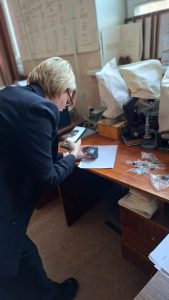
During the reporting period, fieldwork was conducted in the Northern Ulytau area, in the right-bank region of the Karaturgay River and south of the Ryskeldy wintering site. As a result of the field investigations, 130 picrite samples of interest for further mineralogical and geochemical analyses were collected. Preliminary sample preparation of the collected material was performed, including procedures necessary to ensure the representativeness and quality of subsequent laboratory studies. It was noted that the sample preparation stage is critical in scientific research, as its correct implementation minimizes potential errors in analytical work.
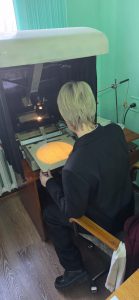
During the reporting period, a business trip to Almaty was also undertaken. A contract was concluded with the K.I. Satpayev Institute of Geological Sciences LLP to carry out a set of laboratory studies. The planned work includes the preparation of thin sections and polished sections, petrographic and mineragraphic descriptions of samples, gravity separation of the material on a shaking table followed by weighing, as well as X-ray spectral microanalysis. The implementation of these studies will provide new data on the mineral composition and ore-bearing characteristics of the investigated rocks.
 |
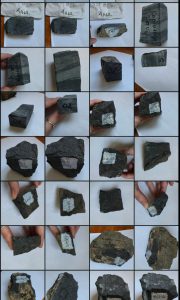 |
Preparation of samples for analytical studies
 |
 |
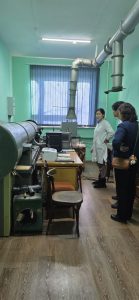 |
Laboratory studies conducted at the Satbayev Institute of Geological Sciences, Almaty.
List of Publications for the Second Half of 2025
No publications are planned.
Research Team
Li Elena Sergeevna – Chief Researcher, PhD, Associate Professor (Docent) of the GRMPI Department.
H-index – 3.
Scopus Author ID: 57200985313.
Web of Science Researcher ID: X-8542-2018.
ORCID ID: 0000-0003-4856-5222.
Baydauletova Irina Vladimirovna – Senior Researcher, Master’s degree holder, Lecturer of the GRMPI Department.
H-index – 1.
Sarsenbekova Asylzat Makhametzhanqyzy – Researcher, Engineer of the GRMPI Department.
H-index – 0.
Nigmatullova Angelina Maksumovna – Engineer, Master’s student, group GRM 24-1.
H-index – 0.
Kim Lev Evgenievich – Engineer, Master’s student, group GRM 24-1.
H-index – 0.
Kurenda Alexandra Alexandrovna – Laboratory Assistant, student, group GPR 23-3.
H-index – 0.
Information for Potential Users
As a result of the project implementation, a comprehensive understanding of the modes of occurrence and distribution patterns of rare earth elements and precious metals in the copper–nickel and copper ores of the Ulytau region will be developed, based on the study of their concentrations in sulfide minerals and the analysis of adjacent areas with previously identified copper–nickel and copper occurrences in Northern Ulytau.
Field of Application
The research results can be used in geological exploration and prospecting–evaluation works, in substantiating the development prospects of copper–nickel and copper deposits with platinum-group element and rare earth element mineralization, as well as in scientific and educational activities in the field of geology and subsoil use of the Republic of Kazakhstan.
AP27511129 «Geomechanical justification of technological solutions for efficient development of low-power gold deposits aimed at reducing losses and dilution of ore» – Scientific Project Supervisor Matayev А.К.
Relevance
Currently, a large number of low-grade ore deposits are actively being developed in Kazakhstan, a significant portion of which is characterized by complex geological and mining conditions and low ore body thickness. The extraction of such deposits is traditionally carried out using a descending method, either with ore storage systems or with systems employing open stoping spaces.
Ore storage systems, despite their technological simplicity, are characterized by low productivity and high labor intensity, which reduces their economic efficiency. Consequently, in the practice of developing low-grade deposits, systems with open stoping spaces are increasingly applied, particularly sublevel stoping systems mined in a descending order. The advantages of these systems include high productivity, ease of organizing stoping operations, and reduced labor costs.
However, the use of open stoping systems is accompanied by a number of significant drawbacks, including increased ore losses and dilution. As a result, the quality of the extracted ore decreases, production costs rise, and the overall economic efficiency of mining operations is reduced.
The issue of ore dilution is particularly pronounced in the development of low-power ore deposits, where the influence of the surrounding rock is significantly higher. Collapse of the hanging wall and footwall rocks under the impact of natural stresses, mining operations, and the structural features of the rock mass leads to the inclusion of waste rock in the extracted ore and a reduction in the content of the valuable component.
The degree of ore losses and dilution during the development of low-power ore deposits directly depends on the chosen mining method, the sequence of ore extraction, the geometry of the ore vein, its dip angle and thickness, as well as the mechanical and structural properties of the rock mass. These factors determine the necessity of conducting detailed geomechanical studies and numerical modeling of the stress–strain state of the rock mass, which, in turn, makes improving the efficiency of low-power ore deposit development in Kazakhstan through the optimization of mining systems and extraction parameters a relevant scientific and practical task of modern mining. This task is aimed at reducing ore losses and dilution, ensuring the stability of underground workings, and increasing the economic efficiency of mining operations.
Achieved Results
As a result of the analysis of international and domestic experience, the most effective approaches for minimizing ore losses and dilution during underground mining of low-grade ore bodies have been identified. It has been determined that sublevel drilling and blasting methods with subsequent backfilling provide high techno-economic performance, reliability, and safety of mining operations, and are successfully implemented in international practice, including in Canada, Australia, and China.
The analysis of modern underground mining technologies for low-grade ore deposits showed that the efficiency of ore extraction depends on the ore body geometry, rock mass stability, and control of mining-induced stress. Conventional systems lose relevance at greater depths, whereas methods employing hardening backfill and digital control ensure stable production rates. Combined methods are optimal for low-grade deposits, and geomechanical adaptation of mining schemes enhances rock mass stability and allows an increase in the recovery factor of the valuable component by 15–20% while simultaneously reducing ore losses by more than half.
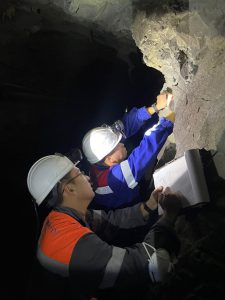
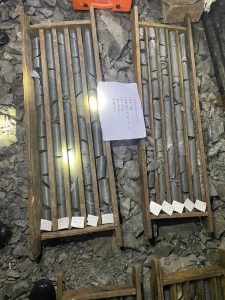
Studies of the structural characteristics of rock masses were carried out using rating classifications such as GSI, RMR, and Q, which enabled a comprehensive assessment of the rock mass condition, its strength properties, degree of fracturing, weathering, and stability under natural and anthropogenic conditions.
 |
 |
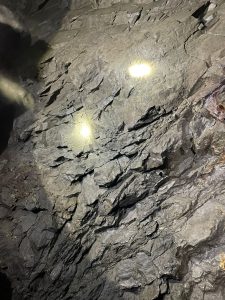 |
Figure 1 – Geomechanical Investigations of a Rock Mass
List of Publications
1) A.M. Suimbayeva, A.Q. Mataev, A.Zh. Auelbekova, Zh. Shlataev. Analysis of international experience in reducing ore loss and dilution in the mining of narrow ore bodies. Mining Journal of Kazakhstan, №9, 2025. https://doi.org/10.48498/minmag.2025.245.9.006
2) A.K. Mataev, A.M. Suimbayeva, A.Zh. Auelbekova, Zh. Shlataev. Analysis of international experience in reducing ore loss and dilution in the mining of narrow ore bodies. №63319, October 23, 2025.
Research Group
1. Matayev Azamat Kalizhanuly – research supervisor, PhD, Associate Professor of the Department «Development of mineral deposits»
Researcher ID D-3766-2019;
ORCID – 0000-0001-9033-8002;
Scopus Author ID – 57219561578.
2. Imashev Askar Zhanbolatovich –PhD, ассоц. проф., зав.каф. РМПИ
Researcher ID – ABC-2138-2021;
ORCID – 0000-0002-9799-8115;
Scopus Author ID – 57204153972.
3. Суимбаева Айгерим Маратовна – PhD, Associate Professor, Head of the Department «Development of mineral deposits»
Researcher ID – AAC-8234-2022;
ORCID – 0000-0001-6582-9977.
4. Mussin Aibek Abdukalykovich – PhD, Associate Professor of the Department «Development of mineral deposits»
Researcher ID – AGD-8697-2022;
ORCID – 0000-0001-6318-9056;
Scopus Author ID – 57225333744.
5. Zhunusbekova Gaukhar Zhumashevna – PhD, senor Senior Lecturer of the Department “Chemistry, Chemical Technology and Ecology” K.Kulazhanov kazakh universityof technology and business
Researcher ID – AAE-8004-2022
ORCID – 0000-0003-2842-270X
Scopus Author ID – 57919123700
6. Shaike Nurlan Kanatuly –м.т.s., senior lecturer of the department «Development of mineral deposits»
Researcher ID – HLH-4610-2023,
ORCID – 0000-0002-2395-4566,
Scopus Author ID – 58220559500
7. Yeskenova Gulnura Berikovna – м.т.s., doctoral student of group GDD-23z of the department «Development of mineral deposits»
Researcher ID – АВС-2138-2021
ORCID – 0000-0001-8184-4085
Scopus Author ID – 58191278200
8. Khamze Askar Muratuly – м.т.s., doctoral student of group GDD-25-1 of the department «Development of mineral deposits»
Researcher ID – LKJ-9695-2024
ORCID – 0009-0006-7170-8438
Information for Potential Users
As a result of the project implementation, a scientifically grounded and practically oriented set of solutions will be developed, aimed at increasing the efficiency of underground mining of low-thickness ore bodies. The developed recommendations and technologies will be in demand by mining enterprises engaged in the development of complex-structured and low-thickness deposits.
Field of Application
Mining industry, at deposits with low-thickness ore bodies.
AP27510559 Modernization of machine-tool equipment of machine-building enterprises with application of composite materials on the basis of additive technologies – Scientific Project Supervisor Berg A.S.
Topicality
The machine elements such as the bed and base are subjected to the greatest stress. These elements are mainly made of cast iron and steel. But the elements made of steel and cast iron do not meet the requirements of today, as they have low vibration resistance and cannot maintain dimensional stability for a long time. In this regard, there is a need to develop vibration-resistant designs of metal-cutting machine tools (MCMT), methods and means of controlling vibrations and oscillations of the machine tool, increasing rigidity and reducing deflection. There was also a need to replace the used materials with new ones that could meet all the necessary requirements, namely composite materials (polymer concretes).
Аpply an alternative, environmentally friendly, universal and cheap manufacturing technology, the construction of the MCMT bed from polymer concrete material with optimized geometry, more accurately describing the behavior of the bed under load, taking into account non-linear effects, the influence of technological factors and different materials. The replacement of the currently used material for the manufacture of long metal-cutting machine tools will increase the rigidity of the structure and reduce the resulting deflection. On this basis we can conclude that changing the design of the long bed of the metal-cutting machine tool will increase the stability of the MCMT, will allow to achieve the required accuracy in the processing of long parts.
Achieved results in the 2nd half of 2025:
The key findings were formulated to achieve the objectives of the project aimed at optimizing the design of a polymer concrete-based MСМ. The main performance requirements were identified, including efficiency, cost-effectiveness, reduced weight, lower vibration levels, and increased rigidity. It was established that the use of polymer concrete ensures significant thermal and dimensional stability of the structure, which is critically important for high-precision machining, while the material’s low coefficient of thermal expansion (CTE) helps minimize frame deformation during operation. A technological manufacturing guideline was developed, enabling a reduction in production cost compared to traditional cast-iron machine frames.
The critical properties of steel and cast iron that must be considered when developing an optimized geometry for a polymer concrete metal-cutting machine tool with reduced vibration levels and increased rigidity were determined. The key disadvantages of traditional materials were identified, including their low vibration-damping capacity, which leads to deterioration of surface quality during high-speed machining, as well as their high coefficient of thermal expansion, which causes significant thermal deformation of the machine frame and loss of positioning accuracy during long-term operation. The factors that enable the development of a polymer concrete geometry that effectively compensates for thermal distortion and utilizes the high internal friction coefficient of the composite to damp vibrations were determined.
List of publications for the 2nd half of 2025.
No
The Research Group
| № | Full name (if any) | Еducation, degree, academic title | h-index | Scopus ID |
| 1 | Berg Alexandra Sergeevna | Senior Research Fellow, PhD, Senior Lecturer at the TEMandS Department | 4 | Scopus ID: 57220610005 |
| 2 | Zhunuspekov Darkhan Serikovich | laboratory assistant, senior lecturer at the TEMandS Department | 4 | Scopus ID: 57209738503 |
| 3 | Warguła Łukasz | Laboratory assistant, TEMandS Department, PhD, Professor, Poznan University of Technology, Poland | 18 | Scopus ID: 57193903118 |
| 4 | Berg Andrey Alekseevich | expert, senior lecturer at the Department of TEMandS | 4 | Scopus ID: 57666724300 |
| 5 | Ashimbayev Damir Asetuly | laboratory assistant, doctoral student of the MSD 24-2 group of the TEMandS Department | – | Scopus ID: 59551456700 |
| 6 | Altynbayev Asset Zhanatovich | Laboratory assistant, TEMandS Department, Process Engineer, Zhakko Karaganda LLP | – | Scopus ID: 59523180000 |
| 7 | Sembaeva Alina Sabetovna | laboratory assistant, TEMandS Department, specialist of PRB Kaz-metiz LLP | – | – |
Information for potential users
As a result of the project, an optimized geometry of a polymer concrete metal cutting machine for a long-range machine will be developed.
Application area
Machine-building enterprises, mechanical parks of large and medium-sized companies in the mining industry, as well as repair and service enterprises.
AR27511047 “Improving the Quality of Machining Stepped Holes in Large-Sized Parts.” Scientific Project Supervisor – N. Zh. Karsakova.
Relevance
Modern mechanical engineering requires improving the accuracy and reducing the cost of machining large-sized parts, especially when boring stepped holes, which are among the most labor-intensive and critical operations. Under the conditions of domestic enterprises, there are problems related to tool vibration, wear of cutting elements, and instability of the geometric parameters of holes, which lead to reduced quality and increased production costs.
The development of a special boring bar and a technology for simultaneous machining of stepped surfaces will make it possible to improve accuracy, reduce vibration, enhance the quality of machined surfaces, and increase productivity. This solution is of great importance for Kazakhstan’s heavy engineering enterprises, as it contributes to import substitution and the implementation of innovative technologies in production.
Results Achieved in the Second Half of 2025
A literature review and analysis of scientific sources were conducted, which revealed that most modern studies are focused on improving the efficiency, accuracy, and quality of machining large-sized parts, as well as on enhancing their restoration technologies through the use of resource-saving methods.
The analysis of the design of cutting tools used in the machining of stepped holes in large-sized parts showed that the most common are modular boring tools with mechanically fastened cutting inserts. Such tool designs provide ease of maintenance, stability of cutting edge geometry, and reduced operating costs.
It was established that cutting elements made of hard alloys, mineral ceramics, CBN (cubic boron nitride), and PCD (polycrystalline diamond) demonstrate high wear resistance and ensure the required machining quality. Modern quick-change clamping systems (Capto, KM, HSK) were also studied; their use contributes to reducing setup time and increasing productivity.
As a result of the analysis, data on the types and materials of cutting inserts, their shapes, and fastening methods were systematized, and optimal configurations for machining stepped holes in large-sized parts were identified.
Research group
| №
|
Names of project performer | Position |
| 1 | Karsakova Nurgul Zholaevna | Scientific Supervisor, Leading Researcher, PhD, Senior Lecturer, Department of Technological Equipment, Mechanical Engineering and Standardization (TOMiS) |
| 2 | Musaev Medgat Muratovich | Principal Investigator, Leading Researcher, PhD, Associate Professor, Department of Technological Equipment, Mechanical Engineering and Standardization (TOMiS) |
| 3 | Imanbaev Yernat Bakyitovich | Senior Researcher, PhD, Director of Service Quality at LLP “Electric Locomotive Assembly Plant” |
| 4 | Turusbekova Ainur Serikbolovna | Researcher, Doctoral Student of Group MSD-24-1, Senior Lecturer, Department of Technological Equipment, Mechanical Engineering and Standardization (TOMiS) |
| 5 | Abdrakhmanov Mirkhat Suendikovich | Researcher, Master of Technical Sciences, Head of the Materials Science Laboratory |
| 6 | Tattimbek Gulerke | Junior Researcher, Master of Technical Sciences, Lecturer, Department of Technological Equipment, Mechanical Engineering and Standardization (TOMiS) |
| 7 | Menglen Dinara Zhuldyzbekkyzy | Laboratory Assistant, Doctoral Student, Group 30-103-24-08, NJSC “S. Seifullin Kazakh Agrotechnical University” |
Information for Potential Users
As a result of the project implementation, a technology for the simultaneous machining of stepped hole surfaces in large-sized parts will be developed, and a prototype of a special boring bar will be created. The proposed technology will improve machining accuracy and quality, reduce vibration and production costs, and increase the productivity of machining processes.
The project results can be implemented at domestic machine-building enterprises, particularly in companies specializing in the production and repair of pumping, mining, energy, and oil and gas equipment. The obtained recommendations and the prototype tool will be used to improve technological processes at industrial enterprises in Kazakhstan, contributing to import substitution and the development of the national engineering school.
Field of Application
The developed technology and special boring tool are intended for use in the machine-building industry, particularly at enterprises engaged in the manufacturing and repair of large-sized housing parts. The project results can be applied in the production of equipment for the oil and gas, mining, energy, chemical, and transport industries, where high precision in machining large-diameter holes is required.
In addition, the elements of the developed technology can be adapted for use in educational and research laboratories of technical universities in training mechanical engineers and conducting scientific research aimed at improving metalworking methods.