
AP19576811 «Development of a Technology for Obtaining a Marketable Product from Fine Dust of Ferroalloy Production» – Scientific Supervisor- D.A. Isagulova
Relevance
Ferroalloy production generates a significant amount of by-products, such as slag, residues of fine fractions of raw ore materials and finished products (ferroalloys), sludge, dust, and various other materials. The use and processing of these materials can reduce the consumption of primary natural resources, thereby increasing the efficiency of the main production process and reducing environmental pollution.
The greatest environmental risks are posed by technogenic wastes from the metallurgical sector of ferroalloy production, which primarily consist of fine-dispersed materials in the form of dust and sludge from various stages of manufacturing.
One of the main methods for enlarging powdery substances is briquetting—a process that requires energy only to shape and compact the briquettes, without the need for thermal energy for agglomeration. Briquetting is the most cost-effective and compact method of pelletizing various dusty materials. Therefore, briquetting production waste using presses becomes economically feasible.
The goal of the project is to develop a new technology for producing ferrosilicon briquettes from fine dust generated in ferroalloy production using a new complex binder material.
Expected and Achieved Results
As a result of the project implementation, the following outcomes are expected:
A new composition of briquetted ferrosilicon will be obtained;
A new technology for producing strong briquettes from dust will be developed;
The interaction mechanism between fine ferroalloy production dust and the new complex binder material will be determined.
Achieved results to date:
As a result of the literature review on the issue under study, the objectives and tasks of the research have been formulated.
Initial samples of a marketable product from fine dust (FD) have been obtained. A series of further studies is planned to examine the complete compositional characteristics and chemical properties of the resulting product.
This work is a preliminary study aimed at determining the optimal parameters. Two different binders and two different compositions were tested.
The study shows that this process can be extended to the reuse of other loose solid wastes from ferroalloy production and offers a comprehensive solution for the recycling of bulk solid wastes.
Achieved Results
For the year 2023 – Work was carried out to assess the feasibility of developing the ferroalloy industry in the Republic of Kazakhstan through the production of marketable products from ferroalloy dust.
Key global trends in the development of the ferroalloy industry were identified. Data on binder compositions and their chemical properties were collected.
Ferrosilicon (FeSi) is used in the steel industry as a modifier added during smelting, as a deoxidizer, and as a melting agent in the production of steel and cast iron.
Information analysis shows that a significant amount of waste is generated during ferroalloy production, including fine ferroalloy dust and other materials. Their utilization and processing can reduce the consumption of primary raw materials, increase production efficiency, and lower environmental pollution.
However, the scale of waste recycling in ferroalloy production remains relatively low. The recycling and reuse of waste as secondary resources are currently relevant and necessary.
The conducted information analysis showed that methods of waste utilization during ferroalloy smelting at production sites are still insufficiently explored. Briquetting is a promising method for secondary processing. Briquettes introduced into furnaces must have certain mechanical and chemical properties. However, there is no standard for determining the suitability of briquettes used in smelting, and no optimal binder has yet been established for waste use.
Thus, by experimenting with different binders, it is possible to find an effective method for briquetting ferroalloy production waste, including fine dust, to obtain strong briquettes and improve the assimilation of alloying elements during their subsequent use.
Work was carried out to produce sample dust-based briquettes from ferrosilicon with a grain size of 0–3 mm using liquid glass as a binder. Ferrosilicon production is an energy-intensive process requiring significant amounts of electricity and raw materials such as ore, quartz (quartzite), fluxes, and reducing agents like coke, coal, and biomass.
The process also generates residues such as filter dust (silica fume), scrubber sludge, and slag. A convenient and cost-effective way of using ferrosilicon dust is briquetting and granulation. High pressing forces result in strong, non-crumbling briquettes.
One article was published in a journal included in the KOKSON database.
One article was published in a journal indexed in the Scopus database with a CiteScore percentile of 35.
One patent for a utility model was obtained in the Republic of Kazakhstan.
For the year 2024 – Research was carried out on the use of various components as binders.
One of the key aspects in the briquetting of fine ferroalloy production dust (FAPD) is the correct selection of the binder component. The binder must provide sufficient plasticity for briquette formation, ensure mechanical strength after appropriate treatment (e.g., drying), and not significantly alter the chemical composition of the briquette so that it complies with the relevant GOST standard for the specific ferroalloy.
A significant amount of research has been devoted to identifying a suitable binder and developing a briquetting charge composition based on FAPD. The optimal binder composition was selected based on the mechanical and chemical properties of the resulting briquettes. The optimal formulation of the final product was determined.
A complex binder composed of liquid glass and bentonite clay was proposed. Various ratios of these additives were studied. The probable strengthening mechanism involves the encapsulation (coating) of dispersed dust particles with clay and their strong adhesive bonding in a liquid glass medium.
Experimental smelting was carried out at the production sites of LLP “NPO Manganets” and LLP “KMZ named after Parkhomenko”, where steel was smelted using test briquettes produced using the developed technology.
A preliminary process flow chart was developed — laboratory tests were conducted to assess the effect of composition and structure of briquettes made from fine ferroalloy production dust.
One article was published in a journal indexed in the KOKSON database.
One article was published in a journal indexed in the Scopus database with a CiteScore percentile of 35.
One utility model patent was obtained in the Republic of Kazakhstan.
For the year 2025 – Laboratory studies were conducted to examine the influence of briquetting parameters on the properties of briquettes made from fine dust (FAPD) generated in ferroalloy production, using iron ore concentrate as part of the charge. The composition of the resulting briquettes corresponds to that of ferrosilicon grade FS50, which makes it possible to use these briquettes as a substitute for standard FS50.
Experimental melts were carried out at the production facilities of the branch of the NC KPM “Z. Abishev Institute of Chemistry and Metallurgy” and LLP “KMZ named after Parkhomenko,” where steel was smelted with partial use of experimental briquettes obtained using the developed technology.
The briquettes were produced from high-dispersion dust (HDD) from ferrosilicon production with the addition of iron ore concentrate. The chemical composition, mechanical properties, and microstructure of the resulting metal were studied.
An act of industrial tests was obtained.
A monograph was published.
A technological process map was prepared based on laboratory studies evaluating the influence of the composition and structure of briquettes made from high-dispersion dust of ferrous alloy production.
One article was published in a journal indexed in the COKSON database.
One article was published in a journal with a CiteScore percentile of 50 in the Scopus database.
One patent of the Republic of Kazakhstan for a utility model was obtained.
Research Team
Isagulova Diana Aristotelevna – Scientific Supervisor, PhD, Associate Professor of the “Nanotechnology and Metallurgy” Department, Abylkas Saginov Karaganda Technical University (KarTU). Hirsch Index: 2 (Clarivate Analytics), 3 (Scopus), 6 (RSCI). Scopus ID: 55778253200.
Yerzhan Aidana – Principal Performer, PhD student of group METD-22-1, “Nanotechnology and Metallurgy” Department, Abylkas Saginov Karaganda Technical University. Hirsch Index: 2. ORCID: 0000-0002-6942-2020, Researcher ID: ABD-5912-2021, Scopus ID: 56901129500.
Dostayeva Ardak Mukhamedievna – Researcher, PhD, Professor of the “Nanotechnology and Metallurgy” Department, Abylkas Saginov Karaganda Technical University. Hirsch Index: 4. ORCID: 0000-0002-1982-2368, Researcher ID: AAB-9478-2020, Scopus ID: 57160297400.
Arinova Saniya Kaskatayevna – Researcher, PhD, Senior Lecturer of the “Nanotechnology and Metallurgy” Department, Abylkas Saginov Karaganda Technical University. Hirsch Index: 1. Scopus ID: 57192206332.
Kovaleva Tatyana Viktorovna – Researcher, PhD, Lecturer of the “Nanotechnology and Metallurgy” Department, Abylkas Saginov Karaganda Technical University. Hirsch Index: 2. Researcher ID: A-2567-2017, ORCID: 0000-0002-1186-1805, Scopus ID: 57211297553.
Alina Araylym Altynbekovna – Researcher, PhD, Lecturer of the “Nanotechnology and Metallurgy” Department, Abylkas Saginov Karaganda Technical University. Hirsch Index: 0. ORCID: 0000-0003-3577-4914, Scopus ID: 57218196165.
Abildina Aizhan Rymkulkyzy – Researcher, PhD student of the “Nanotechnology and Metallurgy” Department, Abylkas Saginov Karaganda Technical University.
Tuganbayeva Asem Adilkhanovna – Researcher, PhD student of the “Nanotechnology and Metallurgy” Department, Abylkas Saginov Karaganda Technical University.
List of Publications for 2023:
1) Омарова А.Е., Исагулова Д.А., Квон СВ.С., Ковалева Т.В. Выбор связующего для производства брикетов из высокодисперсной пыли ферросплавного производства/ DOI 10.52209/1609-1825_2023_3_79. Труды университета №3 (92) • 2023. http://tu.kstu.kz/archive/journal/26
2) D.А. ISSAGULOVA, SV.S. КVON, А.Е. ОMAROVA,
Т.V. КОVALEVA, V.YU. КULIKOV, А.А. АLINA/ Studying the binder effect on the properties of bri quettes of ferroalloy production waste. ISSN 0543-5846 METABK 63(1) 143-145 (2024). Журнал METALURGIJA 63 (2024) 1, 143-145. Хорватия.
3) Патент на полезную модель. Авторы Омарова А.Е., Исагулова Д.А., Ковалева Т.В., Алина А.А. №8617 от 10.11.2023.
List of Publications for 2024:
1) Erzhan А., Кvon Sv.S., Issagulova D.А., Кulikov V.Yu., Коvaleva Т.V. «The possibility of using iron ore concentrate as a binder when briquetting waste of ferroalloy production» // METALURGIJA 63 (2024) 3-4, 454-456. (Хорватия). (Scopus процентиль – 35, CiteScore 1,2), P454-456. – https://hrcak.srce.hr/en/file/456164
2. Патент на полезную модель. № 9155. от 24.05.2024. Способ брикетирования пылевидных отходов, образующихся при производстве ферросилиция. Авторы: Исагулова Д.А., Ержан А., Куликов В.Ю., Квон Св.С., Ковалева Т.В., Адамова Г.Х.
3. Erzhan А.Е., Kvon Sv.S., Okishev K.Yu., Isagulova D.А., Коvaleva Т.V. The use of clay as a binder in briquetting finely dispersed dust of ferrosilicon production. №4, 2024 г.
List of Publications for 2025:
1) Ержан А., Исагулова Д.А., Квон Св.С., Окишев К.Ю., Ковалева Т.В. Возможность использования брикетов из отходов ферросплавного производства для раскисления и легирования кремнийсодержащих сталей. Журнал Литейное производство. №3/2025. 23-27 стр. ISSN 0024-449X.
2) Yerzhan A., Issagulova D.A., Kvon Sv.S., Okishev K.Yu., Kovalyova T.V. Application of ferroalloy production waste as deoxidising agent in steel production. // Наука и техника Казахстана. – Павлодар: Университет Торайгырова. – 2025. – №3. – С. 247–256. (База КОКСНВО).
3) Патент № 10925 25.07.2025. Способ брикетирования высокодисперсной пыли производства ферросплавов с использованием железорудного концентрата. Авторы: Исагулова Д.А., Ержан А., Квон Св.С., Куликов В.Ю., Ковалева Т.В., Адамова Г.Х.
4) Ержан А., Исагулова Д.А. Исследование процесса получения кондиционного продукта из отходов производства ферросилиция. Монография. – Караганда: Calibri, 2025. ISBN 978-601-12-3322-4.
5) Yerzhan A. , Issagulova D.А., Кvon Sv.S. /The influence of iron ore concentrate on the properties of briquettes from ferroalloy production waste. // Acta metallurgica slovaca, Slovaca – 2025. – № 3 (Vol.31), 138-140 pages. (База Scopus, проценитиль 52). DOI: https://doi.org/10.36547/ams.31.3.2216 .
6) Yerzhan A. , Issagulova D.А., Кvon Sv.S. Kovalyova T.V. Comparative analysis of the use of iron ore concentrate with different binders in the briquetting of ferroalloy production waste. // Mechanical Engineering: An International Journal (MEIJ), – 2025, – № 1/2 (Vol. 12), 9-17 pages.. DOI:10.5121/meij.2024.12201. (Конференция)
7) Ержан А., Квон Св.С., Окишев К.Ю. XXIII Международной научно-технической Уральской школы-семинара металловедов — молодых ученых (Екатеринбург, 03–07 февраля 2025 г.). -2025. С. 118-122. (Конференция).
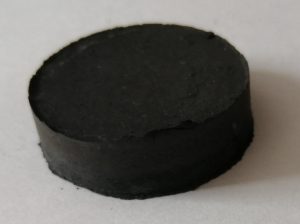
а |
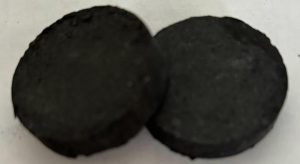
б |
Figure 1 – Experimental Samples
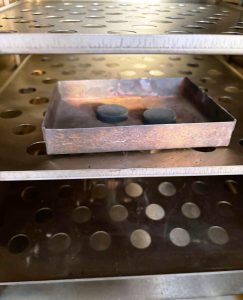 |
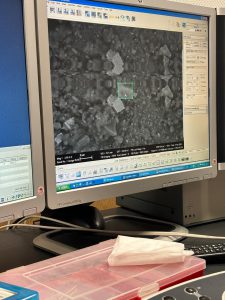 |
Figure 2 – Experimental Procedure
 |
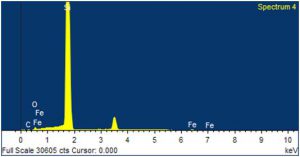 |
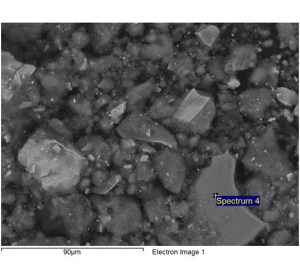
Figure 3 – X-ray Structural Analysis
Information for Potential Users
The results obtained serve as a foundation for more detailed research on the development of pressing and drying regimes using Kazakhstan-originated fine-dispersed dust (FDD) for the production of a marketable product.
Field of Application
Metallurgy, ferroalloy production.
AP19578884: Improving Wear Resistance and Enhancing the Design of Busbar Punching Tool Scientific Supervisor- Mussayev M.M.
Relevance
The global integration of domestic and foreign manufacturers has led to an increased use of foreign equipment in the domestic industry. One such example is busbar punching machines.
The manufacturers and suppliers of these machines, as well as the associated technological and tooling equipment, are primarily Russian and Chinese companies. It has been identified that the tools used for punching holes in busbars wear out quickly and fail more frequently. Worn tools are replaced with new ones, which are purchased from foreign manufacturers. The high consumption of tools significantly increases production costs.
Research results confirmed that the tools used for punching holes in busbars wear out quickly and are prone to frequent failure. Worn tools are replaced with new ones sourced from foreign manufacturers, and the high tool consumption negatively affects the cost of the produced products.
This situation highlights the need to develop a technology to enhance the wear resistance of busbar punching tool designs. Scientific research aimed at solving this problem is therefore highly relevant.
Project Objective
The objective of the project is to increase the wear resistance and improve the design of the busbar punching tool.
Achieved Results
As a result of the project, a technology for increasing the wear resistance of the working part of the busbar punching tool has been developed. A prototype of the busbar punching tool was designed and manufactured. The project led to new scientific and technical solutions, which include:
– Development of a technology to ensure the wear resistance of the busbar punching tool design, including the establishment of patterns of the interrelated influence of punching modes, geometric parameters, and tool material on its wear resistance; enhancement of the wear resistance of working surfaces using technological methods and heat treatment; determination of optimal punching modes and tool geometry depending on the material being processed.
– Creation of a mathematical model for assessing the wear resistance of the tool surface.
– Development of a combined (modular and monolithic) design of the busbar punching tool.
– Development of a methodology for calculating the stress-strain and thermal state of the tool design during processing using specialized computer programs.
The developed busbar punching tool represents an improved design, implemented in either modular or monolithic form. Implementation of the developed design allowed for an increase in tool wear resistance by 25–40% compared to existing analogs, extended its service life by 1.5–2 times, and reduced costs for repair and replacement of worn elements by 20–30%. The economic effect is achieved through reduced equipment downtime, increased productivity, and decreased unit costs of busbar punching operations.
Photo of the Work (with Photo Title)
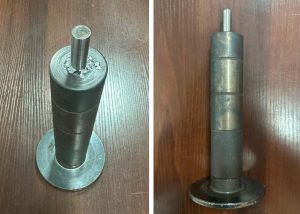
Restored Busbar Punching Tools
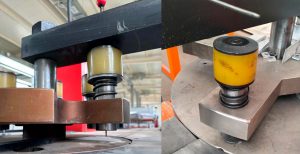
Assembled Tools
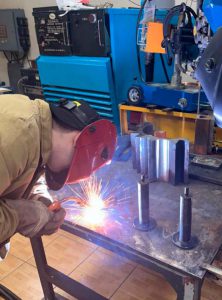
Restoration Process by Surfacing
Research Team
1. Medgat Muratovich Mussayev – Scientific Supervisor, PhD, Associate Professor at Abylkas Saginov Karaganda Technical University
Hirsch Index – 6;
Researcher ID: AAR-6997-2020;
ORCID: 0000-0001-9875-8159;
Scopus Author ID: 57220743851
2. Bakytzhan Serikovich Donenbayev – Responsible Performer, PhD, Senior Lecturer at Abylkas Saginov Karaganda Technical University
Hirsch Index – 4;
Researcher ID: Y-2178-2018;
ORCID: 0000-0001-6923-3476;
Scopus Author ID: 57193404717
3. Gulnur Baymurzaevna Abdugaliyeva – Performer, PhD, Associate Professor at Abylkas Saginov Karaganda Technical University
Hirsch Index – 4;
Researcher ID: AAN-2968-2021;
ORCID: 0000-0003-3469-3901;
Scopus Author ID: 57200327289
4. Sayagul Oralovna Tussupova – Performer, PhD, Associate Professor at Toraighyrov University
Hirsch Index – 4;
Researcher ID: AGX-8685-2022;
ORCID: 0000-0002-8920-4901;
Scopus Author ID: 57210194689
5. Nurgul Zholayevna Karsakova – Performer, Master of Technical Sciences, Senior Lecturer at Abylkas Saginov Karaganda Technical University
Hirsch Index – 2;
ORCID: 0000-0003-4524-5135;
Scopus Author ID: 57219115360
6. Dana Sailauovna Kassymbabina – Performer, PhD Candidate
Scopus Author ID: 57882320800
List of Publications
Main Research Results Published in the Following Scientific Works
In 2023, based on the conducted research, the following works were published:
In domestic journals:
1. Mussayev M.M., Donenbayev B.S., Sherov K.T., Kassymbabina D.S., Aman I.M. Study and Analysis of the Wear Characteristics of Busbar Punching Tool Blanks // Science and Technology of Kazakhstan, Pavlodar: Toraighyrov University Publishing, 2023, No. 2, pp. 48–56.
2. Certificate No. 37787 for entering data on copyright objects into the State Register: Study and Analysis of the Wear Characteristics of Busbar Punching Tool Blanks / Kassymbabina D.S., Mussayev M.M., Published: 04.07.2023.
In 2024, based on the conducted research, the following works were published:
In domestic journals:
1. Mussayev M.M., Sherov K.T., Kassymbabina D.S., Abdugaliyeva G.B., Bobeev A.B. Metallographic Study of Samples from Busbar Punching Tool Material Surfaced with ESAB OK TUBRODUR 35GM Wire // Science and Technology of Kazakhstan, Pavlodar: Toraighyrov University Publishing, 2024, No. 3, pp. 52–65.
2. Certificate No. 50538 for entering data into the State Register of Rights on Copyright-Protected Objects: Metallographic Study of Busbar Punching Tool Material Samples Surfaced with ESAB Wire / Kassymbabina D.S., Imasheva K.I., Karsakova N.Zh., Mussayev M.M., Published: 17.10.2024.
In international journals:
1. Mussayev, M., Sherov, K., Kassymbabina, D., Abdugaliyeva, G., Donenbayev, B., Kardassinov, S., Karsakova, N., Tussupova, S. Research of Wear and Increasing Wear Resistance of the Working Part of Busbar Punching Tools by Surfacing Method // Journal of Applied Engineering Science, Vol. 22(3), 2024, pp. 654–664. https://doi.org/10.5937/jaes0-51175. (Scopus 43rd percentile)
In 2025, based on the conducted research, the following works were published:
In domestic journals:
1. Mussayev M., Kassymbabina D., Sherov K. Investigation of the Design of a Busbar Punching Tool Restored by Replacement of the Working Part with a Carbon Steel Insert // Material and Mechanical Engineering Technology, No. 3, 2025, pp. 16–21.
2. Mussayev M.M., Sherov K.T., Kassymbabina D.S., Konkubaeva A.N., Karsakova N.Zh., Tolganay Zh., Donenbayev B.S. Method for Restoring the Worn Surface of a Busbar Punching Tool. Utility Model Patent No. 11266, 10.10.2025.
3. Monograph: Technology for Restoring Busbar Punching Tools and Increasing Their Wear Resistance / M.M. Mussayev, D.S. Kassymbabina, N.Zh. Karsakova; Abylkas Saginov Karaganda Technical University, 2025, 126 pp. ISBN 978-601-355-583-6.
In international journals:
1. In a peer-reviewed journal in the scientific field of the project with a CiteScore of 35 (top 35 percentile) in Scopus: Kassymbabina, D., Mussayev, M., Sherov, K., Tolganay, Z., Karsakova, N. Numerical and Experimental Analysis of the Stress-Strain State of Busbar Punching Tools Restored by Various Methods // International Journal of Innovative Research and Scientific Studies, Vol. 8(7), 2025, pp. 227–236. https://doi.org/10.53894/ijirss.v8i7.10430. (Scopus 67th percentile)
Information for Potential Users
The potential users of the developed technology are domestic industrial enterprises equipped with busbar punching machines. The developed technology for increasing the wear resistance of the working part of the busbar punching tool, as well as the combined design of the busbar punching tool, have a high level of commercialization potential.
Field of Application
Mechanical processing sector of the machine-building industry.
Grant for young scientists from the Institute of Nuclear Research No. AP19579208 “Creation of a universal prototype gear pump for hydraulic systems capable of pumping viscous liquids of various natures” – Scientific Supervisor: c.t.s., Professor Zharkevich O.M.
Relevance
Due to the desire to continually improve performance and efficiency, minimize dimensions, and reduce vibration, pulsation, adverse loads, cavitation, and wear of gear pump components, the requirements for materials, technologies, fits, and dimensional tolerances are constantly increasing. This leads to continuous improvements in manufacturing methods, both for the pumps themselves and the materials used for their construction. The most important indicators are the lowest possible failure rate, a wide range of applicability in a given industry, resistance to changing conditions, and the lowest possible noise and pulsation.
Thus, the concept of an innovative gear pump for hydraulic control systems of industrial machines using various types of oils, as well as a compact design solution for damping mechanical vibrations and reducing power loads, was developed.
Project Goal
To develop a concept for an innovative gear pump for powering hydraulic control systems for machine tools and pumping other edible oils, as well as a compact solution for damping mechanical vibrations.
Ожидаемые и достигнутые результаты
An innovative multi-gear pump design has been developed (Figure 1). This pump represents a cutting-edge development designed to significantly improve existing performance and efficiency parameters in liquid pumping systems.
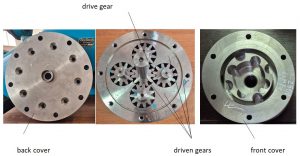
Figure 1. Components of a prototype multi-gear pump
Figure 2 shows the design of a multi-gear pump, with the discharge opening area shown in red and the suction opening area shown in green when the drive gear rotates clockwise.
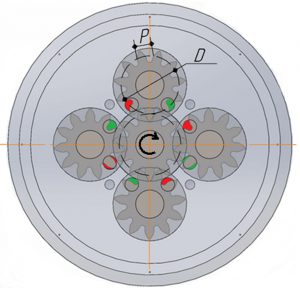
Figure 2. Suction and discharge port openings in the pump casing:
Red – discharge ports; green – suction ports; D – pitch diameter; P – tooth pitch
To conduct tests and determine the output characteristics of a prototype multi-gear pump, the company KF TOO “Ganza-Flex Hydraulic Almaty” (Karaganda, Kazakhstan) developed a laboratory experimental stand as part of the project (Figure 3).
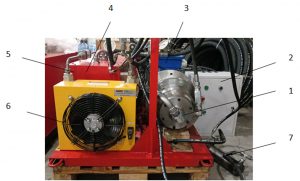
1 – a prototype of a multi-gear pump on a test bench; 2 – frequency converter; 3 – electric motor; 4 – flow meter; 5 – hydraulic tank; 6 – oil cooler; 7 – hydraulic transmission
Figure 3. Assembled test bench
A comparative analysis of the pump characteristics was performed with a change in the kinematic viscosity coefficient for a rotation speed of n = 900 rpm and is shown in Figure 4.
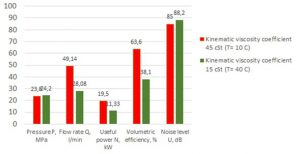
Figure 4. Comparative analysis of the characteristics of a pump with a working fluid at different values of the kinematic viscosity coefficient
An analysis of the obtained experimental data shows that the proposed multi-gear pump design is feasible. Best performance can be achieved at a rotation speed of n = 900–1450 rpm, as lower speeds reduce pump performance and increase fluid leakage. Operating pressure reaches 25 MPa.
Research group
Olga Zharkevich (Scopus Author ID 55339344600; ORCID 0000-0002-4249-4710)
Łukasz Gierz (Scopus Author ID 57203678825; ORCID 0000-0003-4040-5718)
Alexandra Berg (Scopus Author ID 57220610005, ORCID 0000-0003-0528-640X)
Берг Андрей Алексеевич (Scopus Author ID 57666724300; ORCID 0000-0002-8907-1803)
Darkhan Zhunuspekov (Scopus Author ID 57209738503; ORCID 0000-0002-3922-738X)
Asset Altynbaev (Scopus Author ID 59523180000; ORCID 0009-0000-1700-7645)
Список публикаций
1. Zharkevich O., Nikonova T., Gierz Ł., Berg A., Berg A., Zhunuspekov D., Warguła Ł., Łykowski W., Fryczyński K. Parametric Optimization of a New Gear Pump Casing Based on Weight Using a Finite Element Method» //Applied Sciences, 13(22):12154, по научному направлению проекта, индексируемом в базе Web of Science и имеющем процентиль по CitcScore DOI: 10.3390/app132212154 (Scopus 75%)
2. Жаркевич О.М., Никонова Т.Ю., Гиерц Л., Берг А.С., Берг А.А. Анализ конструктивных и технологических особенностей шестеренчатых насосов // Вестник Евразийского национального университета имени Л.Н. Гумилева. №2, Серия Технические науки, 2023, 204 – 214
3. Zharkevich O., Nikonova T., Gierz Ł., Reshetnikova O., Berg A., Warguła Ł., Berg A., Wieczorek B., Łykowski W., Nurzhanova O. Improving the Design of a Multi-Gear Pump Switchgear Using CFD Analysis //Applied Sciences, 2024, 14, 5394 https://doi.org/10.3390/app14135394 (Scopus 78%)
4. Zharkevich O., Reshetnikova O., Nikonova T., Berg A., Berg A., Zhunuspekov D., Nurzhanova O. CFD-FEM Analysis for Functionality Prediction of Multi-Gear Pumps //Designs 2024, 8, 115 https://doi.org/10.3390/designs8060115 (Scopus 67%)
5. Warguła Ł., Gierz Ł., Zharkevich, O., Wieczorek B., Wojciechowski Ł., Perz K., Berg A., Berg A., Zhunuspekov D., Altynbaev A., Kaczmarzyk P., Dziechciarz A. The influence of kinematic viscosity of oils on the energy consumption of a gear pump used for pumping oil in machines and vehicles //Plos One, 2025, 20(9 September), e0331371 (Scopus 86%)
6. Zharkevich O., Berg Al., Reshetnikova O., Berg A., Nurzhanova O., Zhunuspekov D., Stukach O. The Study and Determination of Rational Hydraulic Parameters of a Prototype Multi-Gear Pump //Fluids, 2025, 10(8), 211 (Scopus 62%)
Information for potential users
The gear pump design will increase the service life by at least four times, resulting in savings of approximately €60,000 over 10 years on just one pump, without any downtime. Therefore, the project’s results can be considered commercially viable at any facility that services hydraulic equipment.
Application
The proposed gear pump design can be used in hydraulic equipment capable of pumping liquids of varying viscosities.